

Today, the U.S. Fish and Wildlife Service (Service) announced it had opened status reviews for 38 species of plants, wildlife, and fish endemic to Texas, New Mexico and Arizona (Southwest Species). Section 4(c) of the Endangered Species Act (ESA) requires the Service to evaluate the status of species listed as threatened and endangered at least once every five years (5-year Review) and determine, based on that evaluation, whether any such species should be delisted, downlisted (from endangered to threatened), …

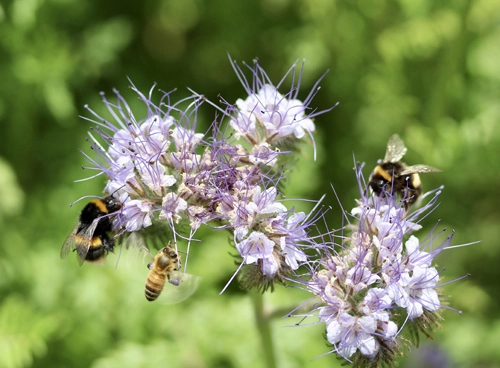
This week, the U.S. Fish and Wildlife Service (Service) issued a proposed rule to list the sand dune phacelia (Phacelia argentea) as threatened under the Endangered Species Act (ESA), along with a proposed section 4(d) rule that would prohibit several activities with respect to the species. The proposed rule also includes a designation of approximately 252 acres of critical habitat in Del Norte County in California, and Coos and Curry Counties in Oregon.
The sand dune phacelia is an evergreen, herbaceous, flowering perennial in the forget-me-not family of plants. It blooms from ...
On November 10, 2021, the U.S. Fish and Wildlife Service (USFWS) published a proposed rule to list the bracted twistflower (Streptanthus bracteatus), a plant species found only in Texas, as a threatened species under the Endangered Species Act (ESA). The USFWS is proposing to list the bracted twistflower with a species-specific rule under section 4(d) of the ESA (4(d) rule), as well as to designate approximately 1,607 acres in central Texas as critical habitat for the species.
The bracted twistflower is a flowering annual plant and a member of the mustard family that can grow over ...
Today, the U.S. Fish and Wildlife Service (Service) finalized its reclassification of the Tobusch fishhook cactus (Sclerocactus brevihamatus ssp. tobuschii), a small cactus found in Texas, downlisting the species from endangered to threatened under the Endangered Species Act (ESA).
As previously reported here, the Service concluded that downlisting the cactus was warranted given an increase in the number of observed individuals. While only 200 cactuses were known when the species was listed as endangered in 1979, the Service now estimates there are more than 3,300 ...
On August 12, 2013, the National Marine Fisheries Service refused to list the alewife herring (Alosa pseudoharengus) and blueback herring (Alosa aestivalis), concluding that based on the best scientific and commercial data available, neither species warranted protection under the Endangered Species Act. The determinationn was in response to a petition submitted by the Natural Resources Defense Council. The news was not all bad for the herring, however, as the National Marine Fisheries Service also stated that it will be working with the Atlantic States Marines ...
Nossaman’s Endangered Species Law & Policy blog focuses on news, events, and policies affecting endangered species issues in California and throughout the United States. Topics include listing and critical habitat decisions, conservation and recovery planning, inter-agency consultation, and related developments in law, policy, and science. We also inform readers about regulatory and legislative developments, as well as key court decisions.
Stay Connected
 RSS Feed
Categories
- Alternative Energy
- Bald and Golden Eagle Protection Act
- Budget
- CEQA
- CESA
- Climate Change
- Congress
- Conservation
- Construction Projects
- Consultation
- Continuing Education
- Court Decisions
- Critical Habitat
- Delisting
- Endangered Species Act
- Event
- Fish & Wildlife Service
- Freedom of Information Act
- Government Administration
- Legal
- Legislation
- Listing
- Litigation
- Migratory Bird
- National Marine Fisheries Service
- NEPA
- Off Shore Wind
- Pacific Northwest
- project
- Publications
- Regulatory Reform
- Sacramento-San Joaquin Delta
- SEPA
- Speaking Engagements
- Supreme Court
- Texas
- Timberland
- Water Issues
