Phacelia
This week, the U.S. Fish and Wildlife Service (Service) issued a proposed rule to list the sand dune phacelia (Phacelia argentea) as threatened under the Endangered Species Act (ESA), along with a proposed section 4(d) rule that would prohibit several activities with respect to the species. The proposed rule also includes a designation of approximately 252 acres of critical habitat in Del Norte County in California, and Coos and Curry Counties in Oregon.
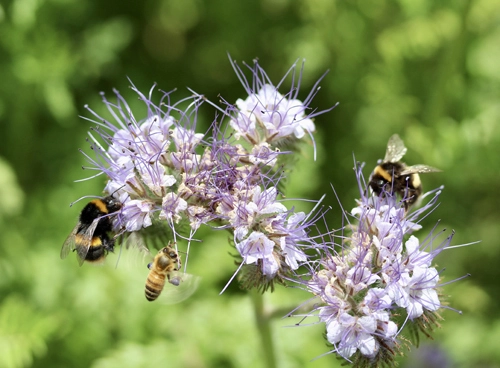
The sand dune phacelia is an evergreen, herbaceous, flowering perennial in the forget-me-not family of plants. It blooms from late April through August, and grows to be 18 inches tall with white or cream-colored, bell-shaped flowers. In common with many coastal plants, the sand dune phacelia’s leaves are thick and fleshy, and like the plant’s stems, are covered by long, silvery hairs.
As of 2017, the sand dune phacelia was found at 26 sites in northwest California and southwest Oregon, occurring beside the coast in sandy habitats such as open dunes and on coastal bluffs. According to the proposed rule, invasive plant species, including European beachgrass, are the primary threat to sand dune phacelia and its habitat, followed by climate change. Due to the fact that the species appears to be largely incapable of significant self-pollination, instead relying upon pollination by bees, pollinator decline also poses a potential threat.
The provisions of the Service’s proposed 4(d) rule are meant to promote conservation of sand dune phacelia by prohibiting the following activities applicable to an endangered plant, except as otherwise authorized or permitted: import or export; certain acts related to removing, damaging, or destroying areas under Federal jurisdiction; delivery, receipt, transport, or shipment in interstate or foreign commerce in the course of commercial activity; and sale or offering for sale in interstate or foreign commerce. The proposed 4(d) rule would also prohibit damaging or destroying the species on non-Federal lands, either in knowing violation of any law or regulation or in the course of any violation of a state criminal trespass law. However, the proposed 4(d) rule carves out an exception from these prohibitions for activities that are designed to conserve the sand dune phacelia and that are conducted by a state conservation agency in accordance with a Service-approved cooperative agreement.
The Federal Register notice states that the Service will accept public comments regarding the proposed rule until May 23, 2022. The Federal Register notice is available at regulations.gov, under Docket Number 2022-05326.

Nossaman’s Endangered Species Law & Policy blog focuses on news, events, and policies affecting endangered species issues in California and throughout the United States. Topics include listing and critical habitat decisions, conservation and recovery planning, inter-agency consultation, and related developments in law, policy, and science. We also inform readers about regulatory and legislative developments, as well as key court decisions.
Stay Connected
 RSS Feed
Categories
- Alternative Energy
- Bald and Golden Eagle Protection Act
- Budget
- CEQA
- CESA
- Climate Change
- Congress
- Conservation
- Construction Projects
- Consultation
- Continuing Education
- Court Decisions
- Critical Habitat
- Delisting
- Endangered Species Act
- Event
- Fish & Wildlife Service
- Freedom of Information Act
- Government Administration
- Legal
- Legislation
- Listing
- Litigation
- Migratory Bird
- National Marine Fisheries Service
- NEPA
- Off Shore Wind
- Pacific Northwest
- project
- Publications
- Regulatory Reform
- Sacramento-San Joaquin Delta
- SEPA
- Speaking Engagements
- Supreme Court
- Texas
- Timberland
- Water Issues
