
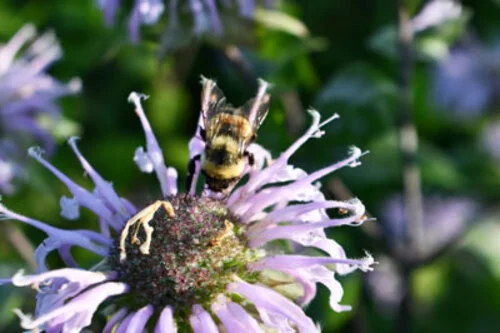
The U.S. Fish & Wildlife Service (USFWS) has published its final rule designating critical habitat for the endangered rusty patched bumble bee (Bombus affinis).
What Does the Rule Do?
The rule designates more than 1.5 million acres of occupied critical habitat broken into 14 units across 33 counties in six states: Minnesota, Wisconsin, Illinois, Iowa, Virginia, and West Virginia. This designation is intended to protect the landscapes that support the bee’s nesting, foraging, and overwintering needs.
What’s New in the Final Rule?
USFWS made several updates between the proposed and final designations:
- Refined habitat boundaries: USFWS removed imprecise or low‑accuracy bee observation records, resulting in a reduction of roughly 20,887 acres from the proposed rule. Some of that location data had accuracy ranges “from 0 to approximately 6.5 million feet,” which USFWS found was not suitable for habitat analysis.
- Exclusions for conservation partnerships: USFWS excluded nearly 80,000 acres from critical habitat designation because they are enrolled in the Nationwide Candidate Conservation Agreement for Monarch Butterfly on Energy and Transportation Lands, which already provides pollinator‑friendly management.
- Military lands exempted: Two Army Reserve Centers—Machesney Park (IL) and Fort Snelling (MN)—were exempted from critical habitat designation because USFWS found that their updated management plans benefit the species.
- Clarified habitat definitions: USFWS refined descriptions of overwintering and nesting habitat based on peer review and new scientific information.
Why This Matters
According to USFWS, the rusty patched bumble bee experienced a widespread and steep decline prior to its listing in 2017, and the critical habitat designation focuses on the areas needed for species survival and recovery.
The final rule emphasizes that critical habitat areas contain the “physical or biological features essential to the conservation of the species,” including spring forage, nesting sites, and undisturbed forest soils for overwintering queen bees.
For landowners, agencies, and partners working within these designated areas, this rule provides some clarity on where USFWS deems conservation efforts are most needed and how conservation of the species may be evaluated moving forward.
What This Means for Facilities and Developers
For projects, properties, or operations that fall within or near one of the 14 designated critical habitat units, this final rule may influence:
- Planning and permitting timelines: Actions in these areas that require any federal permitting will now require consideration of potential impacts to critical habitat.
- Habitat management decisions: Activities such as vegetation management, ground disturbance, or pesticide use may need additional review.

 Associate
Jennifer Seely is an environmental and natural resources attorney whose practice spans permitting, compliance, administrative adjudications and litigation in federal courts. She represents clients on issues related to ...
 Partner
Ben Rubin is chair of Nossaman’s Environment & Land Use Group. Ben assists developers, public agencies, landowners and corporate clients on a variety of complex land use and environmental matters. He counsels clients on matters ...
Nossaman’s Endangered Species Law & Policy blog focuses on news, events, and policies affecting endangered species issues in California and throughout the United States. Topics include listing and critical habitat decisions, conservation and recovery planning, inter-agency consultation, and related developments in law, policy, and science. We also inform readers about regulatory and legislative developments, as well as key court decisions.
Stay Connected
 RSS Feed
Categories
- Alternative Energy
- Bald and Golden Eagle Protection Act
- Budget
- CEQA
- CESA
- Climate Change
- Congress
- Conservation
- Construction Projects
- Consultation
- Continuing Education
- Court Decisions
- Critical Habitat
- Delisting
- Endangered Species Act
- Event
- Fish & Wildlife Service
- Freedom of Information Act
- Government Administration
- Legal
- Legislation
- Listing
- Litigation
- Migratory Bird
- National Marine Fisheries Service
- NEPA
- Off Shore Wind
- Pacific Northwest
- project
- Publications
- Regulatory Reform
- Sacramento-San Joaquin Delta
- SEPA
- Speaking Engagements
- Supreme Court
- Texas
- Timberland
- Water Issues
