
Last week, the U.S. Fish and Wildlife Service (Service) published two proposed rules to delist a total of 24 species under the Endangered Species Act (ESA). First, the Service published a proposed rule delist 23 species as a result of the species’ extinction. The 23 now-extinct species include thirteen species of birds, eight freshwater mussels, one Texas fish, and one Hawaiian plant. The Federal Register notice indicates that, based on the best available scientific and commercial data, these species are no longer extant, and therefore no longer meet the definitions of endangered or threatened species under the ESA.
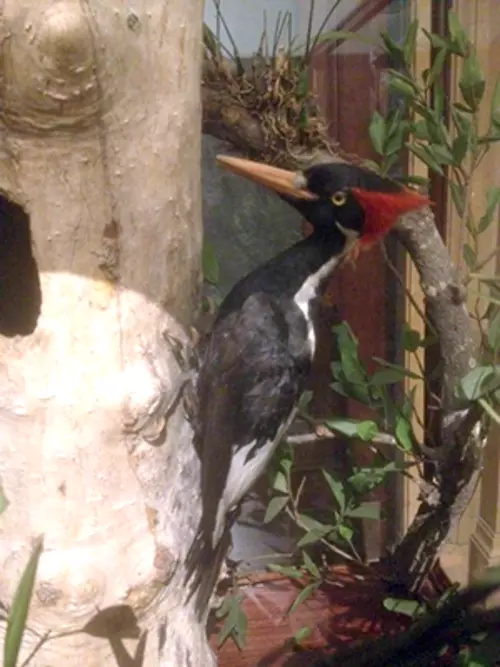
Notably, the ivory-billed woodpecker (Campephilus principalis), a bird known for its black and white plumage, chiseled beak, and pointed crest feathers, is included on the list. According to the notice, despite decades of extensive survey efforts, the most recent unrefuted sighting of the ivory-billed woodpecker occurred in 1944. The Service posits that loss of mature forest habitat and widespread collection of the species contributed to the decline of the species and its eventual extinction. The Service is asking members of the public to submit information or comments on the proposed rule by November 29, 2021. This proposed rule and supporting documents are available at regulations.gov, under Docket Number FWS-R4-ES-2020-0110.
In a separate Federal Register notice, the Service published a proposed rule to delist the Braken Bat Cave meshweaver (Cicurina venii) from the ESA due to a taxonomic revision. The Service originally listed the Braken Bat Cave meshweaver, a cave-dwelling spider occurring in Texas, as an endangered species in December 2000. However, the Service’s most recent 5-year status review for the Madla Cave meshweaver (Cicurina madla) in 2019 indicated that the two arachnids have been synonymized. As a result, the Service has since determined that the Braken Bat Cave meshweaver does not constitute a discrete taxonomic entity, and therefore does not meet the ESA’s definition of a species. However, because the Braken Bat Cave meshweaver has been synonymized with the Madla Cave meshweaver, which is currently listed as an endangered species, this proposed rule will not change the Braken Bat Cave meshweaver’s status or protections under the ESA. The Service will accept public comments on the proposed rule until November 29, 2021. This proposed rule and supporting documents are available at regulations.gov, under Docket Number FWS-R2-ES-2021-0054.

 Associate
Sam Savoni focuses her practice on a variety of environmental and land use matters, including those dealing with the Endangered Species Act, National Environmental Policy Act, Clean Water Act, National Historic Preservation Act ...
Nossaman’s Endangered Species Law & Policy blog focuses on news, events, and policies affecting endangered species issues in California and throughout the United States. Topics include listing and critical habitat decisions, conservation and recovery planning, inter-agency consultation, and related developments in law, policy, and science. We also inform readers about regulatory and legislative developments, as well as key court decisions.
Stay Connected
 RSS Feed
Categories
- Alternative Energy
- Bald and Golden Eagle Protection Act
- Budget
- CEQA
- CESA
- Climate Change
- Congress
- Conservation
- Construction Projects
- Consultation
- Continuing Education
- Court Decisions
- Critical Habitat
- Delisting
- Endangered Species Act
- Event
- Fish & Wildlife Service
- Freedom of Information Act
- Government Administration
- Legal
- Legislation
- Listing
- Litigation
- Migratory Bird
- National Marine Fisheries Service
- NEPA
- Off Shore Wind
- Pacific Northwest
- project
- Publications
- Regulatory Reform
- Sacramento-San Joaquin Delta
- SEPA
- Speaking Engagements
- Supreme Court
- Texas
- Timberland
- Water Issues